
Modern Résumés for a New Chapter

Welcome back to the RALI·CO Community Corner!
Each month, I answer real questions from professionals navigating career transitions, leadership growth, and personal reinvention. My goal is to share practical insights from coaching conversations that help you take ownership of your next move, with clarity and confidence.
If you have a question you'd like featured in a future edition, just hit reply and send it my way. Chances are, someone else is wondering the same thing!
Now, onto this month’s featured Q&A:
Q: I'm planning to retire within the next 1–2 years after spending 32 years in education. I’d love to continue working part-time in a completely different field, but I’m unsure where to start. I haven’t written a résumé in over 30 years. What does a modern résumé even look like? And how can I highlight transferable skills when I’m switching careers?
A: Transitioning into a new field after a long and successful career is an exciting new chapter. The good news: your decades of experience have equipped you with a wealth of transferable skills, communication, problem-solving, leadership, and adaptability, all of which are highly valued across industries.
Whether you’re preparing to leave education, corporate life, or another long-term profession, updating your résumé is the perfect first step toward defining what’s next.
Modern Résumé Essentials
There are two key areas to focus on: format and content.
1. Format
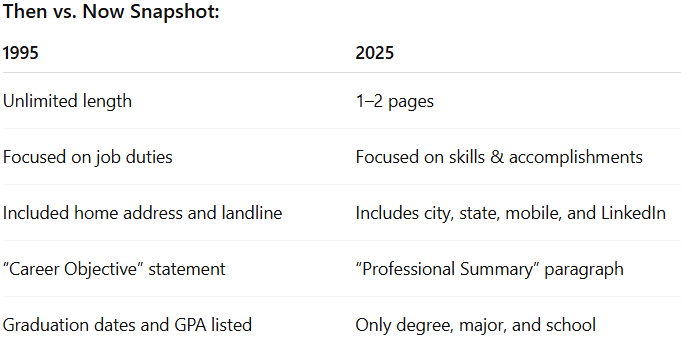
Résumé formatting has changed significantly since the 1990s. Today’s versions are typically one to two pages, designed with clean layouts and optimized for Applicant Tracking Systems (ATS) that scan for keywords and relevant experience.
If your résumé hasn’t been updated in years, it might still include outdated elements, like a full mailing address, an AOL email, or five pages of job history. A modern résumé should include:
Contact Information: email, phone, and LinkedIn link
Professional Summary: a brief overview of your strengths and goals
Skills Section: highlight transferable and technical skills
Work Experience: results-oriented bullet points
Education & Certifications: degrees, not graduation dates
Optional: volunteer work, projects, or relevant interests
2. Content
Your résumé should tell a story, not just of where you’ve been, but how your experience translates into your next opportunity.
While you’re still working, take time to reflect and document your:
Skills
Strengths
Personal values
Purpose
This reflection helps you tailor your résumé toward roles that align with who you are now and what you want next.
When switching fields, emphasize accomplishments that demonstrate transferable strengths. For example:
Project Management → Useful in nonprofit, education, or consulting roles
Team Leadership → Valuable in customer service, retail, or healthcare support
Written & Verbal Communication → Key in marketing, training, or administrative roles
Next Steps
If you’re curious about life after retirement but aren’t sure where to begin, consider:
Volunteering or part-time work to test new interests
Online courses or certifications to build fresh skills
Informational interviews with professionals in fields that spark curiosity
Your next chapter doesn’t have to feel uncertain, it can feel intentional, fulfilling, and aligned with your values.
Need help getting started? I can help you identify your transferable skills, share modern résumé templates, and review your draft to ensure it reflects your next chapter, not just your past roles.
Send me a note if you’d like support. Let’s make your next move meaningful.
Until next time,
Rachel

Comments